
Tooth Extraction
What Is Tooth Extraction, Why Is It Needed, and What Happens If You Don’t?
Tooth extraction may sound scary, but it’s not as worrying as you might think. It’s one way of protecting your oral health, and it can effectively stop dental problems from getting worse.
Just hearing the words “tooth extraction” can make you wince. We understand that patients often have many questions: Will it hurt a lot? What should I do after a permanent tooth is removed? Should I just leave the gap? How should I look after myself afterwards? That’s why The Tooth Club has gathered everything you need to know about tooth extraction in one place, to put your mind at ease and help you understand the procedure better.
Why Is Tooth Extraction Important?
Tooth extraction is one form of oral healthcare. A dentist will only recommend removing a tooth after diagnosing that it can no longer be saved with other treatments, or that it poses a risk of serious, spreading infection. If left untreated, it could harm your oral health and your other teeth. Common reasons for extraction include:
- Tooth decay – If a tooth is badly decayed and left untreated for a long time, the decay can reach the pulp. At that point, it may no longer be treatable with a filling or root canal, and it may spread to neighbouring teeth. In such cases, the dentist may recommend extraction.
- Gum disease – Gum conditions such as periodontitis, caused by bacteria and plaque building up on the teeth, can lead to swollen, inflamed gums, gum recession, and tooth sensitivity. In these cases, extraction may be necessary.
- Accidents – If a tooth is severely damaged or broken in an accident and can’t be repaired with other dental treatments, it may need to be removed.
- Orthodontic treatment – For patients getting braces, the dentist often plans which teeth, and how many, need to be extracted to create space so the teeth can realign neatly and without future problems.
- Teeth unable to erupt properly – such as impacted or embedded teeth. If left alone, these may cause other problems, so the dentist may recommend surgical removal.
Experienced Dentists
Quality Materials
Convenient Location in Ekkamai 21
What Are the Methods of Tooth Extraction?
The extraction method depends on the condition of the tooth. There are 3 main methods:

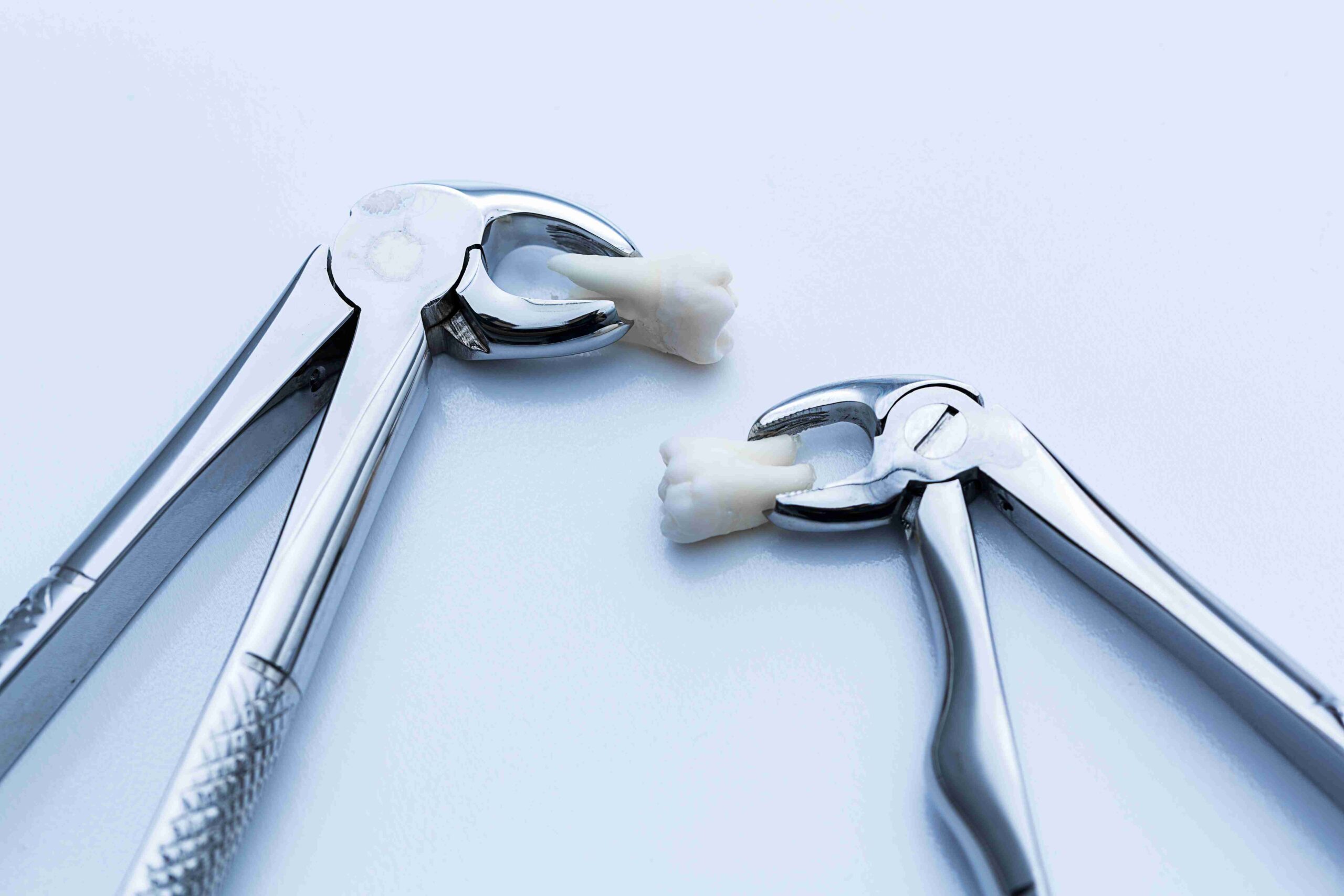
- Extraction with forceps
The most common method, suitable for teeth with plenty of remaining tooth structure and normal roots. The dentist gently rocks the tooth with forceps until it comes free. - Extraction with an elevator
An elevator is a dental instrument designed to loosen and lift teeth, used together with forceps. Dentists often use this technique for upper and lower third molars. - Sectioning the tooth
Done with or without opening the gum. The tooth and its roots are removed in sections. This method suits patients whose teeth are too decayed for forceps, have abnormal roots, or have multiple roots.
Contact Us for More Information
How to Prepare Before a Tooth Extraction
- Give your dentist your full medical history, including current medications, drug allergies, underlying conditions, vitamins and supplements, and any planned dental work, so the dentist can plan the right treatment.
- If you have diabetes, a bleeding disorder or slow clotting, epilepsy, high blood pressure, asthma, heart disease, leukaemia, or kidney disease, or if you take blood thinners or have had a heart valve replacement, you must tell your dentist before treatment, as extraction may need to be postponed or carried out with special precautions.
- Eat before your appointment and make sure your mouth is clean.
- Get plenty of rest beforehand to help ease anxiety.
The Tooth Extraction Procedure
- The dentist confirms the treatment plan with you and identifies the tooth to be extracted.
- Local anaesthetic is injected around the tooth. You’ll wait about 5 minutes, or until the area is numb.
- The dentist gently removes the tooth.
- You’ll bite on sterile gauze to stop the bleeding. In some cases, stitches may be needed, at the dentist’s discretion.
- Keep biting on the gauze for about 30–60 minutes until the bleeding stops.
- The dentist gives you instructions on how to care for yourself after the extraction.
Aftercare Following Tooth Extraction
- Bite firmly on the gauze after the extraction to stop the bleeding.
- Apply an ice pack to the area for 15–30 minutes to reduce pain and swelling.
- If you feel pain once the anaesthetic wears off, take pain relief as recommended by your dentist.
- Don’t touch the wound with your tongue or suck on it.
- Don’t rinse or spit for 12 hours after the extraction.
- Avoid using a straw for 1 week.
- Avoid brushing near the wound for 1–2 days, then brush gently to avoid reopening it.
- Avoid strongly flavoured, spicy, or hot food for the first 2–3 days.
Where Should You Have a Tooth Extracted?
- A clinic close to you
If you have a dental problem, seeing a dentist at a nearby clinic means you can get treatment as quickly as possible, before the problem becomes too serious to treat. - A dentist you trust
One of the main reasons people avoid the dentist is a lack of trust, fear of pain, and fear of treatment. At The Tooth Club, a comprehensive dental clinic, we’ll put those fears to rest. Our highly experienced dentists are skilled in treating all kinds of dental problems, with a gentle touch and close attention to every detail. Your dentist will consult with you at every step to plan your treatment carefully and precisely, using safe, standard-compliant dental equipment, so you have the best possible treatment experience.
Frequently Asked Questions
How long does an extraction take, and how long is recovery?
Once the anaesthetic takes effect, the extraction itself usually takes only a few minutes. The wound takes about 1 month to fully heal. You may feel pain and tightness during the first 12 hours as the anaesthetic wears off, which usually goes away within a day.
I don't want a gap after my extraction. What are my options?
After an extraction, it’s best to replace the missing tooth soon, to prevent neighbouring teeth from tilting or shifting into the gap and causing further oral health problems. Options include dental implants, dental bridges, and dentures. The most suitable option depends on your dentist’s assessment.
How much does a tooth extraction cost?
The cost depends on the position, size, and alignment of the tooth, as well as the reason for extraction. A standard extraction usually starts from around 900–1,000 THB.