What Are Dental Implants?
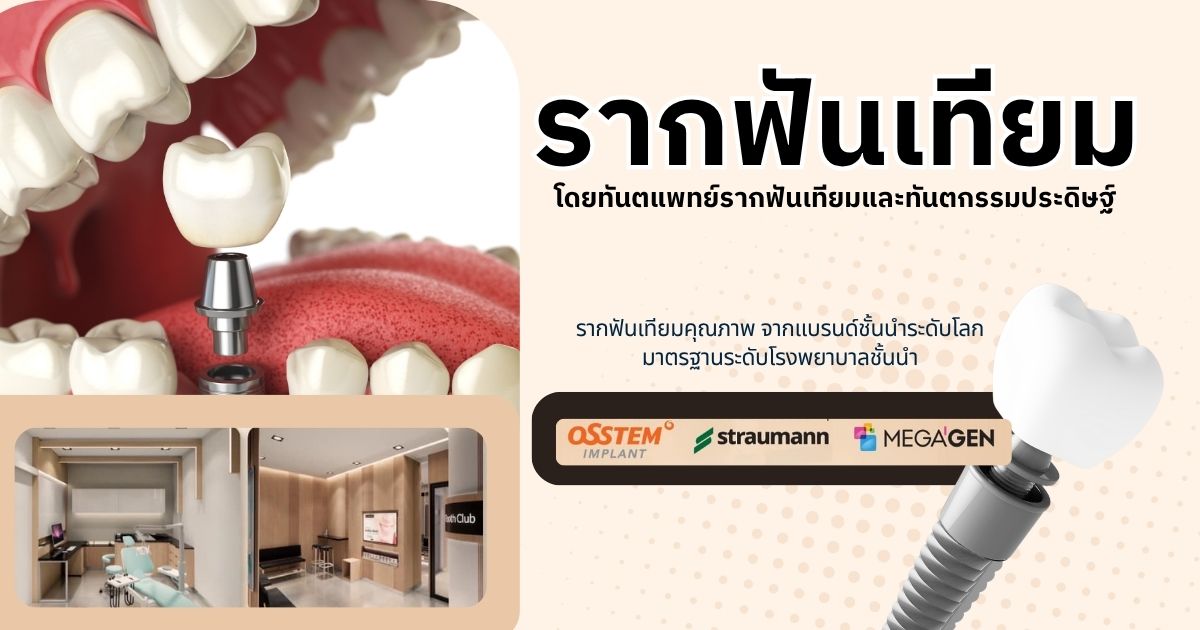
A dental implant is an artificial tooth root that replaces a natural root you’ve lost. Shaped like a screw, it is placed into the jawbone so it stays firmly fixed and never needs to be removed, much like a “permanent denture”. Most implants are made from titanium because it is highly compatible with the human body. Over time, the implant integrates with the surrounding tissue and fuses with the bone, giving results that are as close as possible to a natural tooth.
Real Dental Implant Results from Our Patients
Results may vary from person to person.
Implant Specialist Dentists
Quality Materials
Convenient Location in Ekkamai 21
Who Can Get Dental Implants?
- People with missing or damaged teethsuch as chipped, broken, missing, or loose teeth. An implant creates a new tooth root, which is then topped with a crown, replacing the lost or damaged tooth naturally so you can chew normally again.
- People who don’t want temporary denturesTemporary dentures are easy to lose, less convenient to use, don’t feel like real teeth, and are harder to care for. Dental implants are a better fit for anyone who wants a permanent replacement for lost natural teeth.
- People who want to design their own smileor boost their confidence. Dental implants let you design the shape of every tooth you want, making them ideal for anyone who wants more confidence, a more attractive smile, or a smile designed to their own preferences.
- People who don’t want bracesDental implants aren’t limited to adults. Teenagers can have them too, especially those with dental problems who don’t want braces because of the long treatment time and high cost. Implants can fix problem teeth with immediate results, look natural, and are as easy to care for as real teeth.
Contact Us for More Information
Types of Dental Implants
There are 6 types of dental implants, each with a different approach:
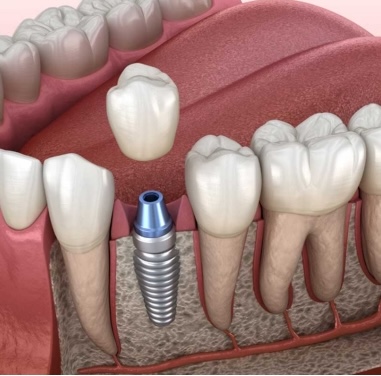
Single ImplantReplaces a single tooth, ideal for people who have lost only one tooth. The dentist places one screw-shaped implant and one fixed tooth, without needing to grind down neighbouring teeth for a bridge. It’s easy to clean and can be used right after treatment.
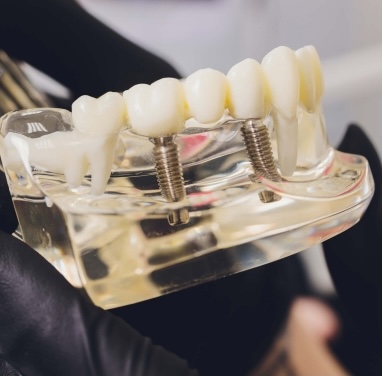
Multiple ImplantFor patients who have lost several teeth in the same area, using a bridge placed over the implants. The dentist will assess your jaw shape and bone volume to decide how many implants are needed.
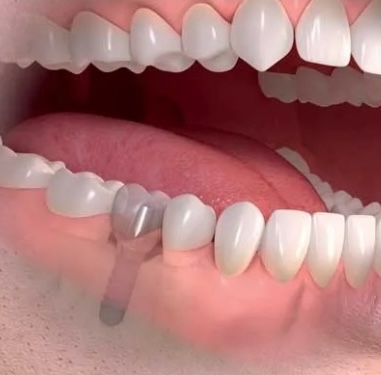
One Day ImplantThe tooth is extracted, the implant placed, and a temporary crown fitted, all on the same day. This differs from a conventional dental implant, where you must wait for the bone and gums to heal completely first.
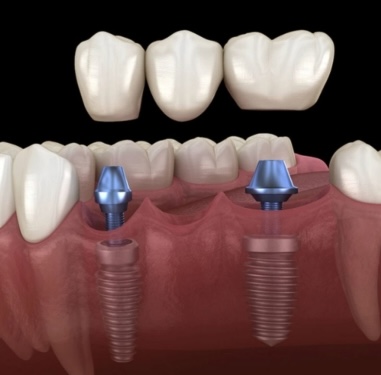
Implant Supported BridgeSeveral implants support a bridge that replaces 2 or more adjacent missing teeth. Suitable for patients who have lost several teeth next to each other.
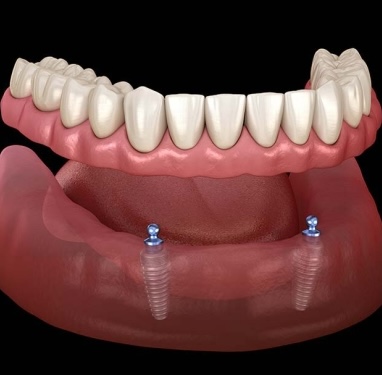
Implant Over DentureImplants are placed across the jaw to support a bridge or full-arch denture, replacing all missing teeth. This fixed implant solution helps restore the teeth you’ve lost.
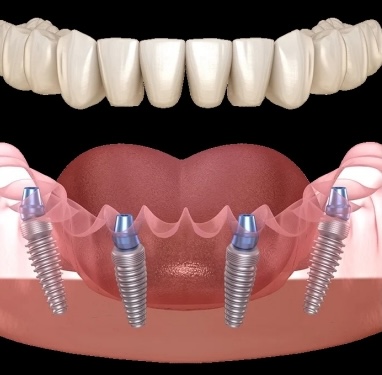
All on 4Four implants are placed in the jawbone to support a fixed denture or bridge. Suitable for people who have lost all the teeth in the upper and lower jaws and want dentures that are more stable and effective than removable dentures.
The right type of dental implant depends on each person’s dental problems and needs. You should consult a specialist dentist so your implant works to its full potential and meets your needs.
The Dental Implant Process
Dental implants, or permanent dentures, involve placing an implant and a crown to replace a problem or missing tooth. The process is quite detailed and includes the following steps:
1.
Immediate Aftercare Following Implant Surgery
- Avoid chewing on the implant side for as long as your dentist advises.
- Avoid rinsing vigorously on the first day, as this can make it harder for bleeding to stop.
- Take your medication on time and follow your dentist’s instructions carefully.
- Keep your mouth clean at all times and use a soft toothbrush designed for post-surgery care.
- While recovering, avoid anything that could put heavy pressure on the implant, such as chewing hard foods or intense exercise, as this could reopen the wound and cause inflammation.
- Some swelling is normal after implant surgery. Applying a cold compress to the outside of your face over the implant area can help, but never hold ice in your mouth, as sharp edges could cut the wound and ice may carry bacteria.
- Avoid strongly flavoured, very sour, very sweet, very hot, or highly acidic foods, as well as hard foods that require heavy chewing.
2.
Long-Term Care to Make Your Implants Last
- Avoid hard or sticky foods, as they may cause the implant to come loose.
- Avoid strenuous or contact sports. An accidental blow to the mouth could damage or dislodge the implant.
- Avoid smoking and alcohol, which are very harmful to oral health.
- Build good oral hygiene habits: brush, floss, and see your dentist regularly.
3.
How Should You Care for Dental Implants?
- Brush at least twice a day and floss daily.
- Avoid chewing hard foods or objects.
- Follow your dentist’s instructions carefully.
- See your dentist as scheduled, or every 6 months.